Be yourself; Everyone else is already taken.
— Oscar Wilde.
This is the first post on my new blog. I’m just getting this new blog going, so stay tuned for more. Subscribe below to get notified when I post new updates.
Be yourself; Everyone else is already taken.
— Oscar Wilde.
This is the first post on my new blog. I’m just getting this new blog going, so stay tuned for more. Subscribe below to get notified when I post new updates.
I’ve discussed this before on my classes discussion board but I feel now I can delve into the topic a bit more.
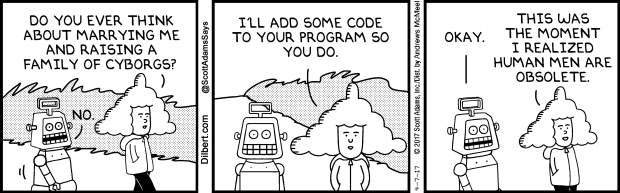
This is a very tricky question, because it is subjective to what someone believes is a genuine and meaningful relationship. Most people are familiar with the “human” version of a meaningful relationship. Each person in the relationship gives and reciprocates different emotions and feelings towards the other person. Humans are capable of emotions, well most anyway but we won’t go into that. Beings of artificial intelligence, however, are not. They are not capable of emotions on their own nor are they able to think for themselves. Sure we have seen some examples of artificial intelligence that “learns” but in reality that is nothing but programing.
To some people, a meaningful relationship may be having a being that sits around and tells the person that everything is great, they are perfect, and they are the absolute best! And that may be a meaningful relationship to that person because that’s what they want or need to hear so they enjoy that type of relationship. To others a meaningful relationship is something that can be reciprocated and moved through different aspects of humanity. These people want a real person with real thoughts, emotions, and ideas that they can connect with because that, to them, is a meaningful relationship. You can only program a device with artificial intelligence to do so much, you can’t get them to genuinely care or love, any “care” or “love” you experience from something of artificial intelligence has been programmed into it so essentially it is not real or genuine but that may be what some people want.
So in the end, as I said before, it is subjective to whether or not people and artificial intelligence can have a meaningful connection; It all comes down to what that person feels they most connect with.
It most definitely is an ABSOLUTE necessity to unplug sometimes. I honestly feel that it is good to unplug as often as you can and just appreciate what is going on in the world around you. People have their eyes so glued to their screens anymore that they may not notice what is around them.
The only drawback I could see to unplugging would be that you are less in touch with the current events going on but, let’s be honest, is that really such a bad thing? But the benefits? Oh my gosh the benefits would be that you can actually engage yourself and be present in the moment. You’ll get to witness a child’s first steps, the smile of a loved one when they see you, the way the leaves shake, ever so slightly, when a bird lands on a branch, and many other beautiful things that can, and will, come from you unplugging for your devices.
I once knew someone who would say “Why go to ~insert location~ when you can just Google pictures from your phone?” I don’t know about you but I feel like seeing and experiencing a breathtaking sight is much better than scrolling through a digital photo album looking at edited photos. The feeling of being in the presence of something so beautiful and the emotions that go along with awe when you stand near something so breathtaking is priceless, no photo on a screen could ever do that.


Chapter 8: “The Techno-Social Institutions”
2. In what industries will robots replace human workers? How should workers and their families and communities handle this transition, especially if they are over the age of 50 or so?
Robots have already begun to replace people in the workforce. I travel around the country competing at horse riding competitions and every rest area I stop at contains some sort of fast food joint. Each fast food joint has the option to order at a kiosk rather than ordering from the cashier. I have personally seen people order from the kiosk rather than going up to the cashier even when there is not a single person in line. I do NOT understand the thought processes behind this, but anyway…
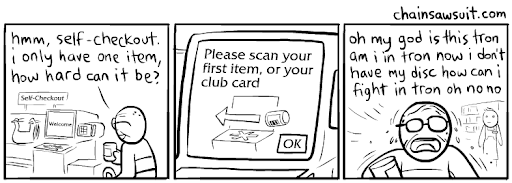
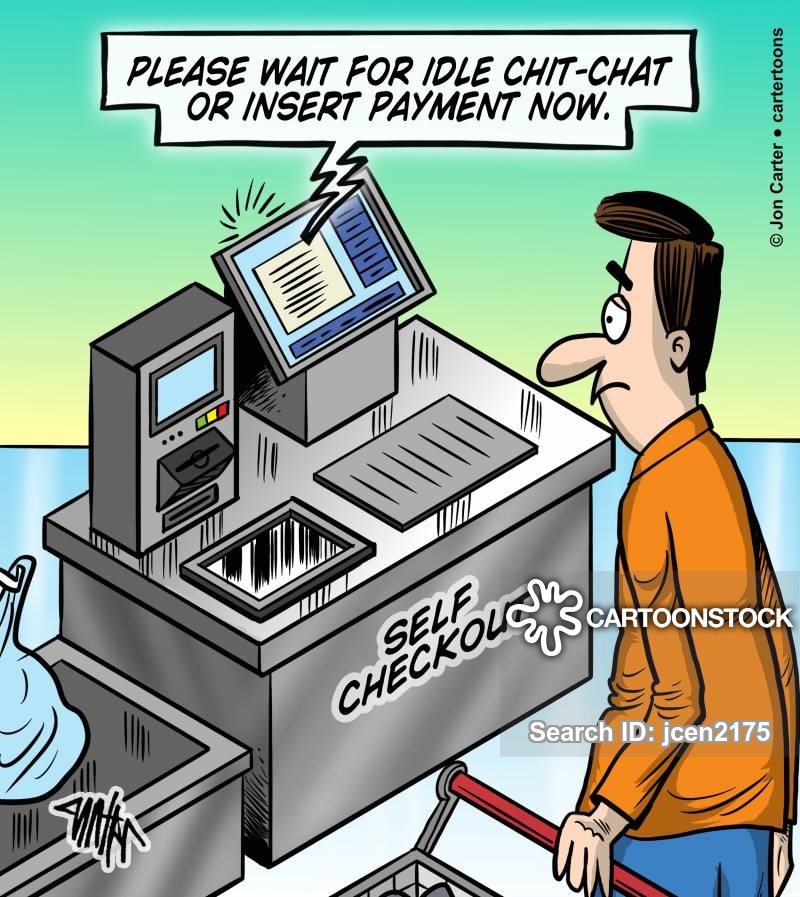
These kiosks are not a new thing and they have been creeping up for the last few years. It started in big name stores such as Walmart and Shoprite with their self-checkout stations. I remember when there used to be a rule for these self-checkout areas that you could only have up to ten items to keep the area clear and keep everything moving quickly. They were designed to allow people who had two or three things to avoid waiting behind people who had their full grocery carts. Sadly, this rule seems to have fallen to the wayside. I frequently see people with overflowing carts going through the self-checkout stations which caused more traffic causing the stores to remove more of their cashier checkouts and installing more self-checkouts.
These self-checkout and self-serve kiosks are causing people to lose their jobs because stores only need to hire one person to man an area of six self-checkouts rather than hiring six cashiers. People are going to have to learn how to service these machines if they want a chance to keep their jobs because someone needs to know how to run or fix them because that’s one thing that the machines can’t do (Yet…) This transition is going to be super rough for people. The older demographic know how to work with and communicate with people and may not adapt well to these new automated and computerized services. It is going to be a learning curve and the curve has already started. Why do we feel the need to change something that has been working just fine for the last however many decades? Why must we computerize everything?
Chapter 7: “Friending, Dating and Relating”
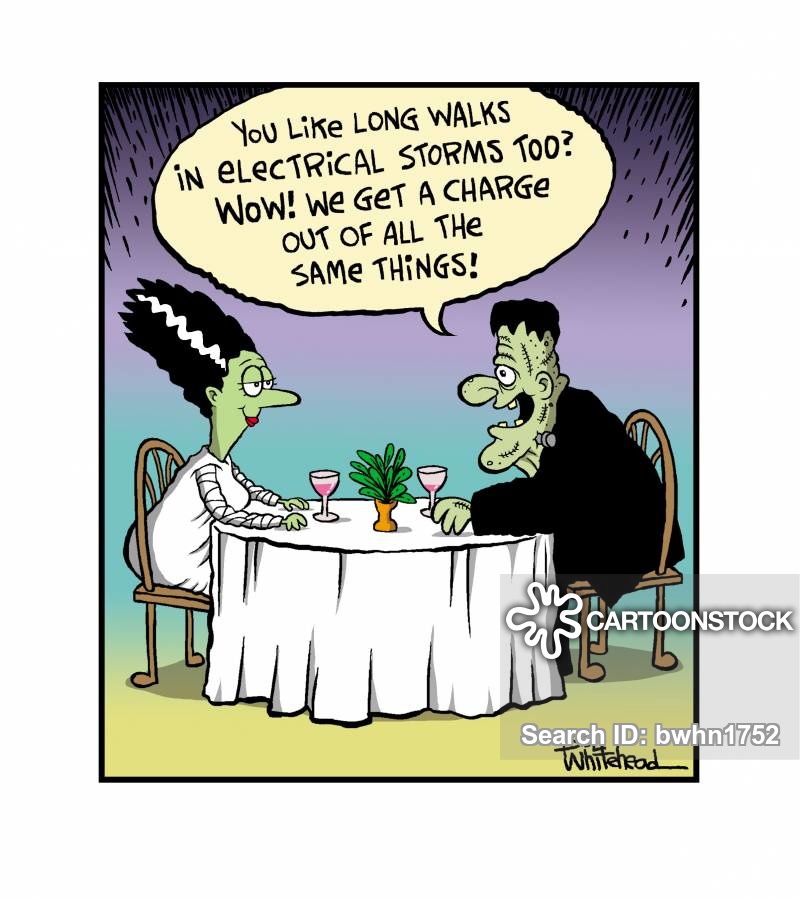
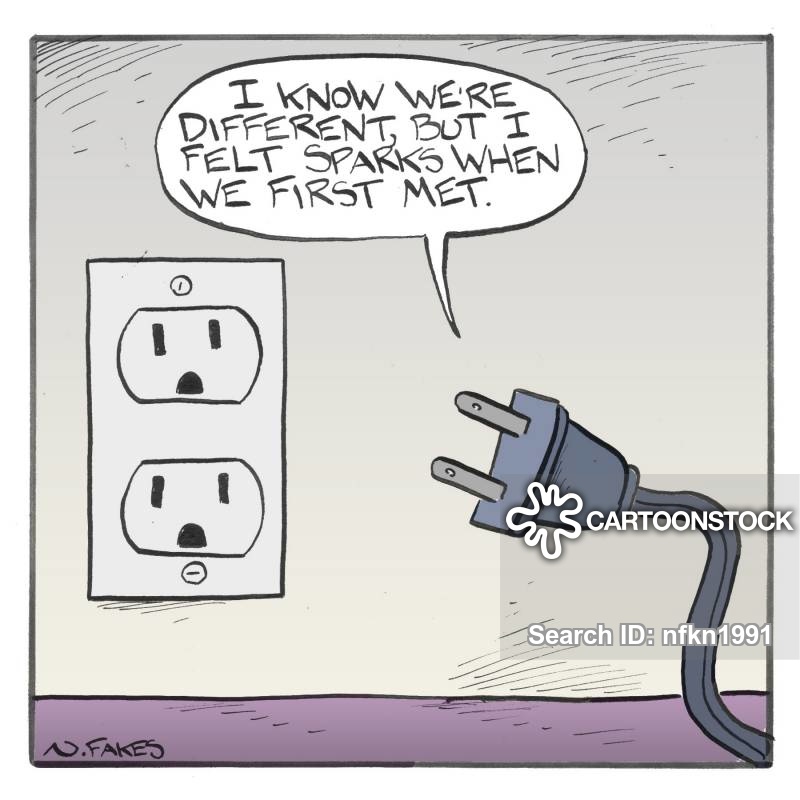
2. The chances of two people feeling a special attraction and an interpersonal spark (i.e. “chemistry”), are comparatively greater in a digital environment than offline. Do you agree or disagree, and why?
I agree and disagree with the statement about online dating that the chances of feeling a spark in a digital environment are greater than offline. Don’t worry, I shall explain my reasoning.
It definitely seems like, in theory, it would be one hundred times easier to find a “spark” through online dating. The odds are definitely better, that’s for sure. Online dating opens you up to a whole other world of people that you may never have come in contact with in your usual area; You may be able to find people that have more similar interests to what you have. Think city girl who longs to be a country girl so wants to find a country boy, you know, like how ever other country song is portrayed to be haha. Online, as discussed before, it is so much easier to “be yourself” or someone that you wouldn’t dream of being during your normal daily life. This can be great for your self confidence, but bad for the dating pool.
Say you start talking with someone and you fall in love with them over the internet. They’re saying all of the right things, liking what you like, disliking what you dislike, it seems so perfect and you just have a “connection.” You finally take the plunge and decide to meet them offline for a date and they turn out to be NOTHING like they portrayed themselves to be. That connection that you felt melts away and you realize that you connected with your idealization of what and who that person was rather than who or what they actually were. Take that into consideration when you think you’ve “connected” or “sparked” over the internet. Are you connecting to a person or an idea of a person you have imagined because that’s how they were portrayed to you?
On the flip side, I disagree with it being easier to find a “spark” with someone online and say that it is much easier to connect with someone in person than online. If anything, it’s a little more true to source. In person, you are seeing the person for who they are with (hopefully if they’re being honest) them being completely open to you. You can see their flaws, see their quirks, their habits, their mannerisms, etc and you are talking to each other which automatically creates SOME sort of connection by default. When you know how someone is in person there is a much greater chance at connecting or “sparking” with them than falling in love with the idea of someone over the internet.
2. Do people create new, different projections of themselves online, or do they stay close to their face-to-face identities? Discuss.
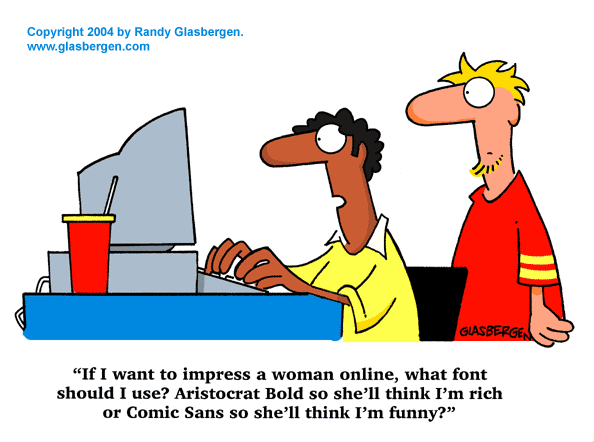
Behind a screen you can literally be anyone that you want to be. You can change you name, release your inner personality, and just let those lovely alter-ego juices flow freely! It has been said that it is so much easier to talk to people from the safety of your technology (be it a tablet, phone, laptop, etc) and that statement is very true. Creating or releasing an alter ego online can be a person’s way of expressing themselves without fear of judgement.
Society places a lot of stigma on what is and what is not acceptable and many people do not feel comfortable allowing their true selves to be brought to the forefront. When they wish to speak they don’t, in the presence of others they’ll change their views to conform to the views of those around them. Humans are very, very quick to pick out what is different and that causes many people to try to mold themselves to what is “normal,” when in reality there is no such thing as normal.
Due to the anonymity online I believe people most definitely take advantage of the fact that they can portray a different person than what they put on in the “real world.” The safety of the screen creates almost like an armor allowing people to distance themselves from who society thinks they are and instead bring forth what they wish they could. Granted this can cause a few issues, the most prominent being online dating and not knowing if the person you are talking to is really who they say they are. But, to many, the benefits outweigh the risk.
Come on, who wouldn’t create an alter ego if they had the chance. Pretending to be someone you’ve always wanted to be sounds exciting!
2. Does innovation tend to reduce social inequality or deepen it? Provide examples.
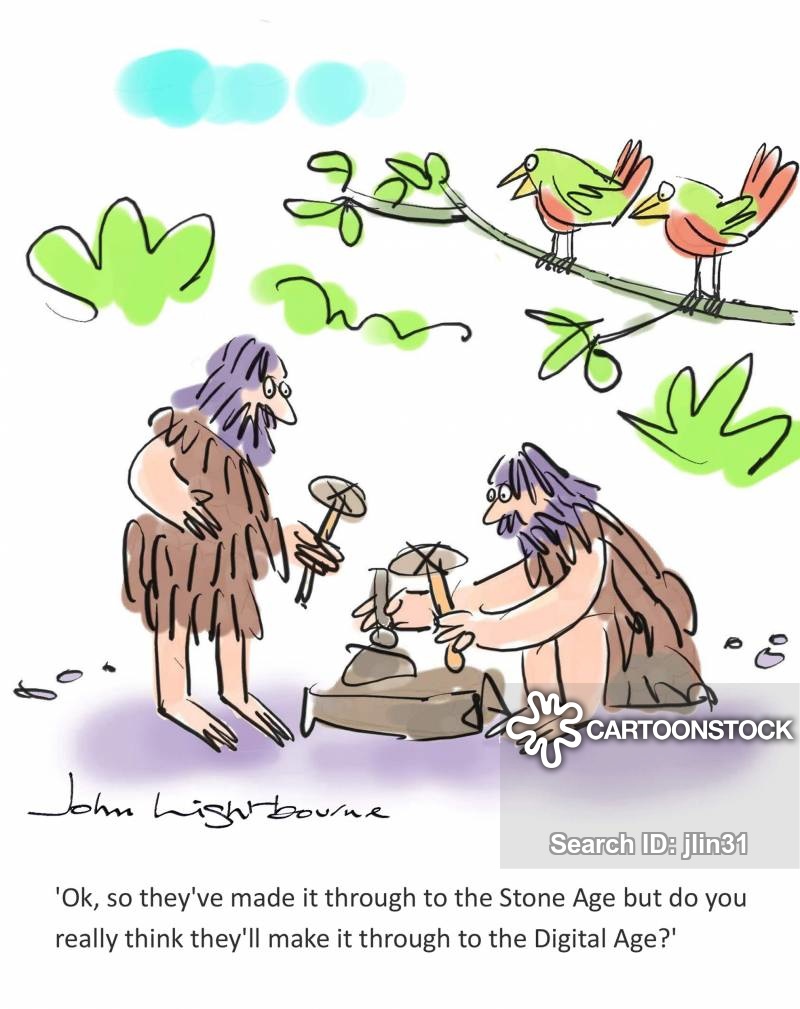
I, personally, believe that innovation is doing a very good job of deepening our social inequality issue. Sure many, if not all, people are able to find and connect to a suitable internet source but what about the more luxurious things that are being created? Extremely expensive “robots” are popping up more and more in our lives. From cars that drive themselves to speakers that talk back to you to refrigerators that can send you a photo of what it contains when you are miles away. These things are said to help improve our society as a whole but what about those who cannot afford them? Not everyone can afford a car that can drive itself and eventually, if they were to become more prominent, the divide between those who could afford them and those who could not afford them would be distinct. Those who could buy the fancy, expensive, most up-to-date technological toys and those who could not, would potentially create problems within society.
Things like these would almost be like dividing society into two new species but which species is the better of the two?
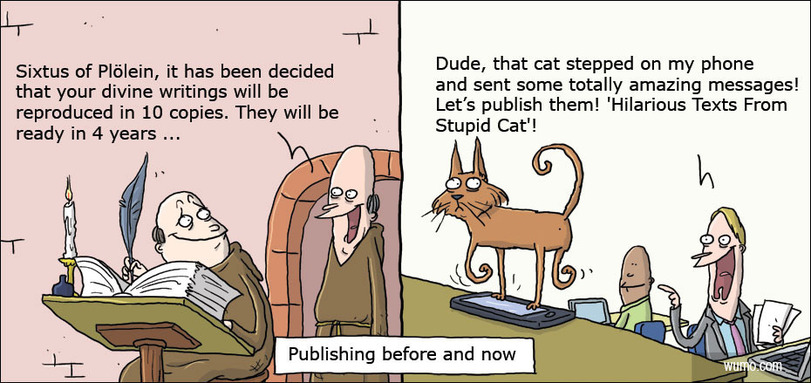
3. What are some of the pros and cons of self-publishing on the internet as opposed to publishing news, stories, books, etc. in traditional outlets? Think both personally and professionally.
Some of the pros of self-publishing on the internet could be quite a stretch to even call them pros. One such idea being that by self-publishing you are taking out the middle-man and essentially doing all of the footwork yourself to get your content out there. BY doing it thins way, you are reducing the amount of money you have to put out to get your content into the eyes of the people. While some may see this as a pro, it could also be seen as a con. By going it alone you have to do all of the legwork for your content and while it may be nice to save a few bucks it might take a considerable amount of money for your content to go anywhere.
Another pro could be that the internet makes EVERYTHING super easy to share. By having content that is easily shareable over a vast amount of people it can get to the eyes of people who may never have seen it otherwise. One of the issues with this is that you need to make sure that the content that you are putting out through your self-publishing is correct and/or properly cited. If you use someone else’s information in your content and the vast shareability of the internet makes them aware of it, you could incur fees or even legal action from the source you did not properly cite. Not to mention then your credibility could be taken into question.
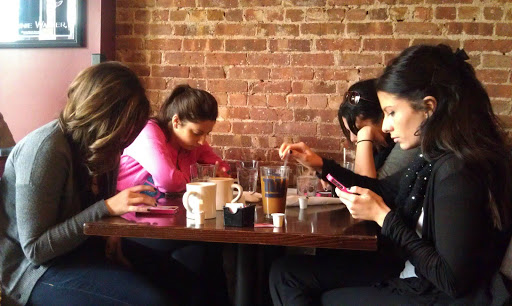
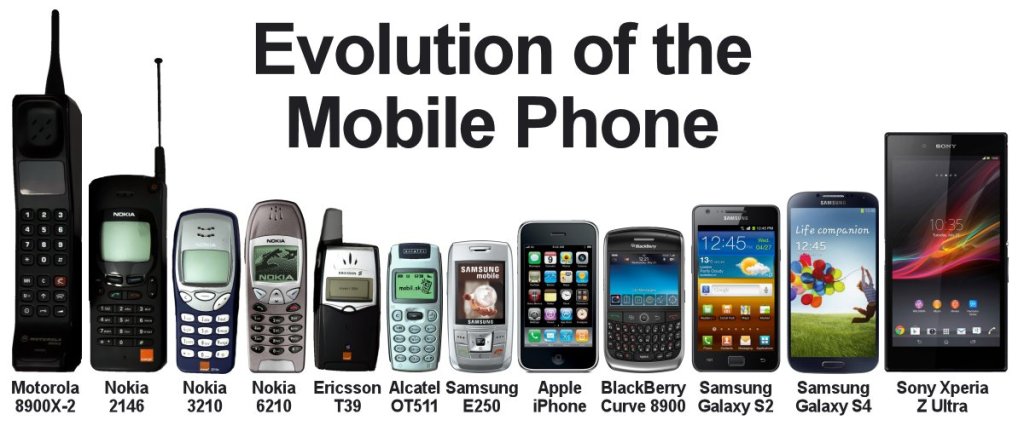
Like many things the portability of technology has its advantages and its disadvantages. Let’s start with the disadvantages to get them out of the way. One of the disadvantages of how easily portable technology is that is seems to disconnect people from the things that are going on around them. Rather than having a conversation with the person sitting across the table from them, people are siting across from each other on their phones, completely disconnected from reality. Another disadvantage would be that it gives people the complex of having no patience due to having whatever information it is that they need at their fingertips. Sure that sounds like a good thing and it very well is but we lose the ability to “wait and see” and instead we, collective we, develop a “want it now attitude.”
An example of a key advantage to having such portable technology sits right in our classrooms. By having such portable technology, students are able to research and do their assignments wherever they are. There are so many beneficial apps out that that can helps students do anything from make flash cards to writing an essay to creating an excel sheet. As a student myself, I find my phone an invaluable tool in my college experience. I cannot tell you how many times I have forgotten to submit an assignment and how nice it was to have a little mini computer in my pocket that had the ability to not only serve as a platform for creating my assignment but to also be able to submit my assignment through it. It has been a lifesaver!
In general, I do believe that communication was much clearer and more effective before social media. For one, when you are able to speak in person or over the phone it is quite easy to distinguish the tone with which a person is talking in. By being able to hear and understand the tone it gives you a better idea of what that particular person is trying to convey. During the new digital age, we are always trying to find ways to get things done quickly so came the invention of “text speak.” Through “text speak” words are shortened into mere letters and with the missing letters the word loses a lot of its meaning. Also, going back to the tone aspect, by reading a screen you are unable to distinguish between the tone with which a person is texting. A simple word such as “yes” in a text message can be misconstrued and misread in a few ways; it can be read as angry, exasperated, excited, sad, but the person reading the word doesn’t know the tone of the texter so it is very unclear in what they are trying to convey.
Unfortunately, at the rate we are going, talking seems to be becoming more obsolete than a necessity. It has always been easier to talk to people through a screen, what’s to stop them from making it their sole source of communication?
Put down the phones and screens and start enjoying each other’s company again! It will be worth it, I promise!

4. Do you tend to be an early adopter or a laggard when it comes to adopting a new digital technology, or something in between? Discuss and share your rationale.

 Pieces of Me